


From the Sun’s Heart to You: The Journey of a Single Photon
I remember being four, maybe five, trying to catch a beam of sunlight that snuck through the window one morning.
I was so sure I could grab it. But it kept slipping through my fingers, and I was furious. Why can’t I catch you?
Then I made the classic mistake! I looked straight at the Sun, trying to figure out where this magic was coming from. My eyes burned, tears streamed down, and I got even more mad. What kind of thing gives you light but won’t let you look at it? The Sun. My forever obsession, right from the start.
What is light? my little curious mind would wonder. What makes it? What’s it made of?
I was always amazed at its capability of vanishing darkness and making the world around us visible. It felt like magic to me, and nobody would tell me the secret.
I remember my younger self sneaking off to the cyber café down the street; yes, a cyber café, because this was the ’90s and the internet was still this brand new, mysterious thing.
I sat down at one of those bulky computers and googled: “What is light made up of?”
Sounds crazy, right? A little girl, spending her precious internet minutes trying to solve the universe’s riddles. But I needed to know.
And here’s the gift of growing up. I found my answers. Every single one of those questions that kept little me awake, wide-eyed and wondering? Answered. And the truth? It’s even more magical than I imagined.
Now, if you’re an astrophysicist, a scientist reading this, you might be smiling at my childhood wonder. You already know this story. But for the rest of us, this one’s for you.
This is the life story of light.
Close your eyes and turn your face toward the Sun. Feel that warmth on your skin?
That warmth just completed one of the most epic journeys in the universe. And I’m going to tell you its story. A story that began long before you were even born, in a place so extreme that matter itself transforms, where the rules of everyday physics dissolve into something almost magical.
This is the biography of a single photon. A particle of light. The one that just touched your cheek.
Let me take you back in time.
Birth in the Furnace:
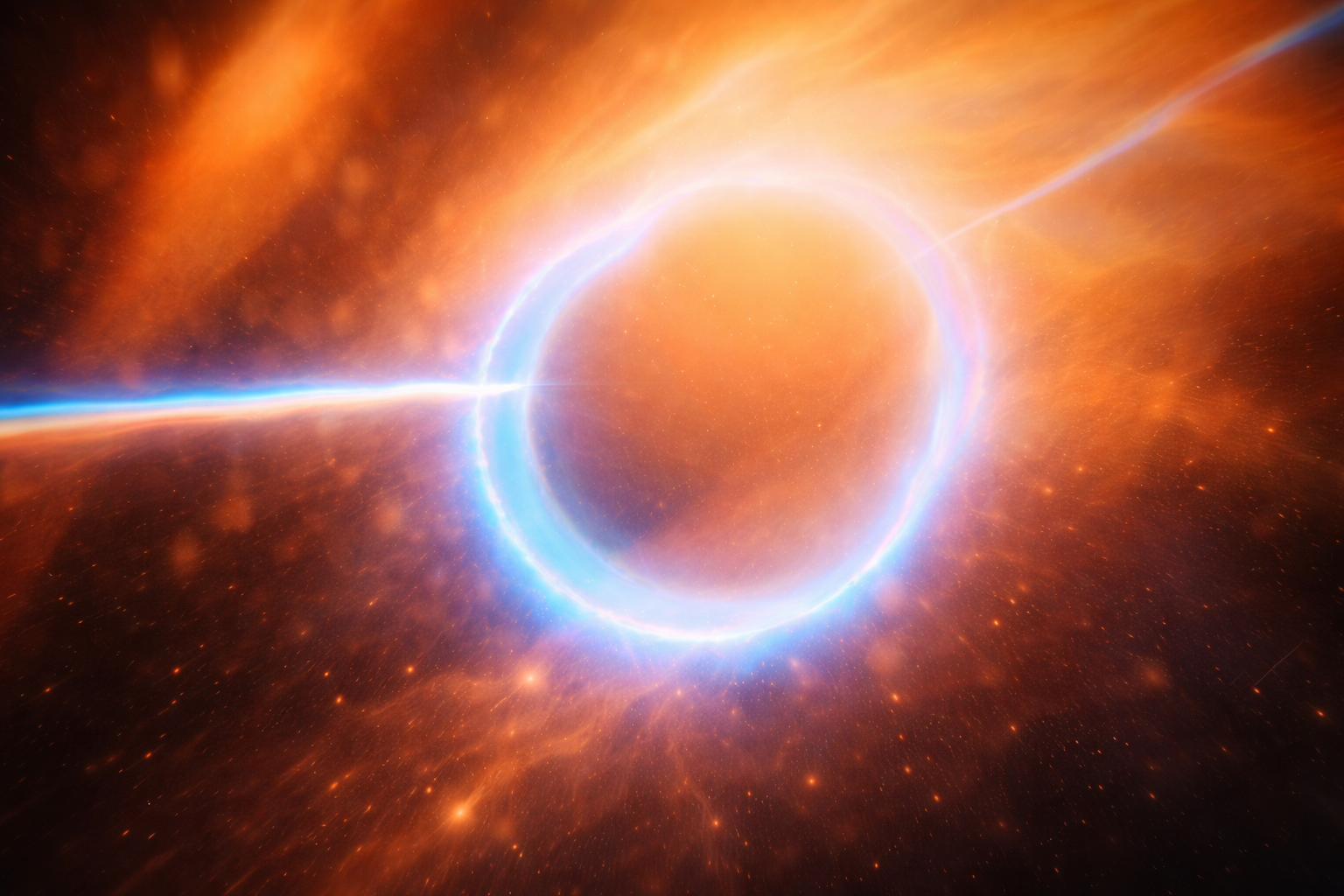
Deep in the heart of the Sun, 150 million kilometers from where you’re standing, there’s a place where the temperature reaches 15 million degrees Celsius. The pressure here is 250 billion times the pressure at Earth’s surface.
This is the core. The furnace. The nuclear forge where stars are powered.
Here, hydrogen atoms are moving so fast, so impossibly fast, that they overcome their natural repulsion and slam together, fusing into helium. This is nuclear fusion. The same reaction we’re desperately trying to recreate on Earth, the same power we’ve only managed to unleash in hydrogen bombs.
But the Sun does it gently, elegantly, billions upon billions of times every second.
When four hydrogen nuclei fuse into one helium nucleus, something magical happens. The helium weighs slightly less than the four hydrogens combined. That missing mass; just 0.7% of the original; doesn’t disappear. It transforms into pure energy, following Einstein’s famous equation: E = mc².
And that energy? It’s released as gamma-ray photons.
This is how our photon was born. It burst into existence as a gamma ray, the most energetic, most dangerous form of light in the universe. If this gamma ray could escape the Sun directly and hit your skin, it would be dangerous enough to tear through your DNA, ripping apart the very molecules that make you you.
But it can’t escape. Not yet. Because it has just been born into a prison.
The Long Walk Through Darkness:
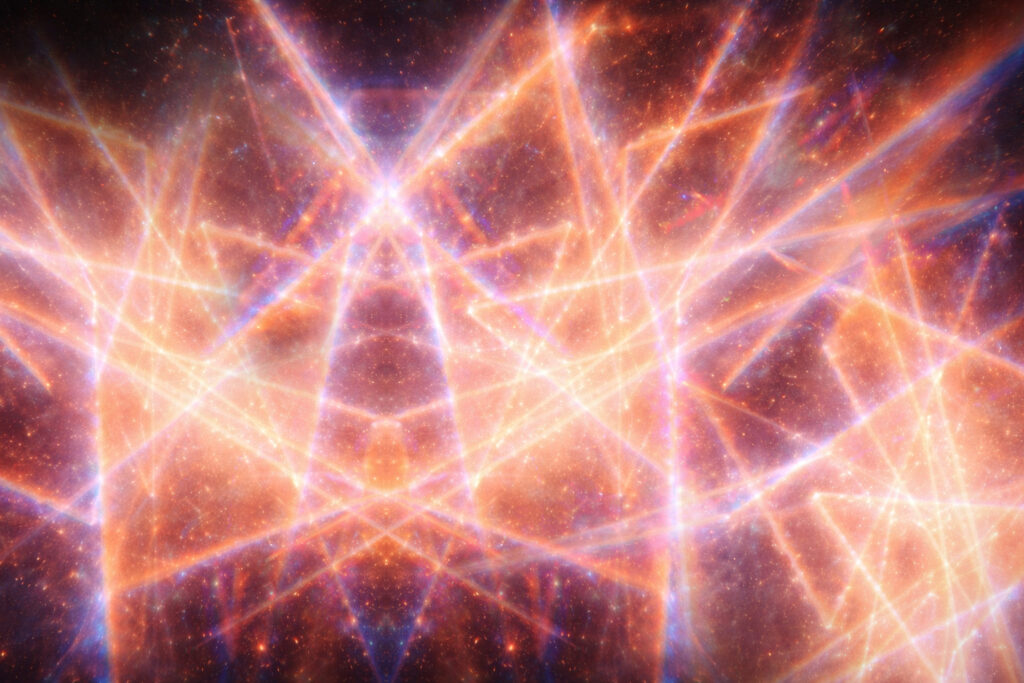
Imagine standing in a crowd so dense that you can’t move an inch without bumping into someone. Now multiply that density by a trillion trillion. That’s where our photon finds itself.
The Sun’s interior is so dense with matter that light can’t travel in a straight line. It moves maybe a centimeter before smashing into an atom. The collision absorbs the photon, and the atom gets excited, jittery with extra energy. A moment later, the atom spits out a new photon. Sometimes in a completely different direction.
The particle begins to wander.
Not outward in a straight shot. That would be too easy. Instead, it stumbles around randomly, like someone trying to find the exit in a pitch-black room the size of a planet. Scientists call this a “random walk.” Up a bit, sideways, down, up again, sideways again. With each collision, it might change direction entirely.
And here’s the really wild part: because the Sun is so hot in the core and slightly cooler further out, each time the photon gets absorbed and re-emitted, it loses a tiny bit of energy. The gamma ray that was born in fusion begins to transform. It becomes an X-ray. Then ultraviolet. Then visible light.
Our deadly gamma ray is slowly, over tens of thousands of years, becoming the gentle sunlight you know.
How long does this journey take? If light could travel in a straight line, it would escape the Sun in about 2.3 seconds. But it can’t. It has to random-walk its way out, bouncing from atom to atom, taking a million tiny steps to make any real progress.
The journey from the Sun’s core to its surface takes, on average, between 10,000 to 170,000 years. Let’s say our photon took about 100,000 years; about the same amount of time that modern humans have existed on Earth.
Think about that. The light touching your face right now began its journey before humans built their first permanent settlements, before we discovered fire. It’s older than civilization. It’s been traveling toward you since your ancestors were still learning to be human.
Breaking Free:
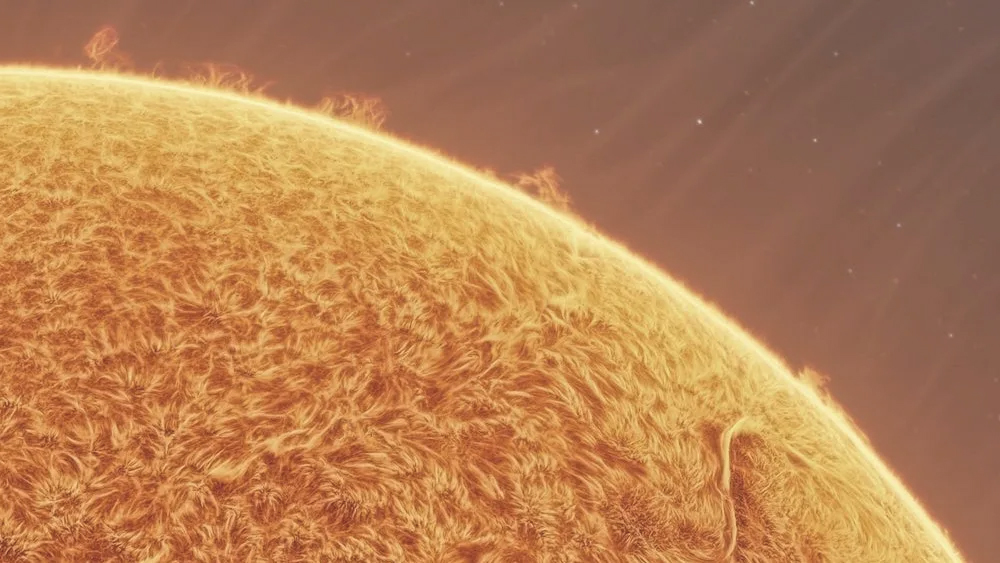
After all that struggle, our photon finally reaches the photosphere, the Sun’s visible surface. The density drops dramatically. Suddenly, there’s room to move.
The particle, now transformed into visible light, bursts free from the surface at 299,792 kilometers per second. The speed of light. Nothing in the universe moves faster.
For the first time in tens of thousands of years, it is free.
It’s racing through space now, through the vacuum, through the nothing between worlds. The Sun’s surface is behind it, growing smaller. Ahead lies darkness and distance and, somewhere in that darkness, a small blue world.
This photon doesn’t know about Earth. It doesn’t know about you. It just moves, as all light moves, in a perfectly straight line at the universe’s speed limit.
Eight minutes pass. Just eight minutes and 20 seconds, barely enough time to brew coffee.
But in those eight minutes, the photon crosses 150 million kilometers. It passes through the domain where Mercury scorches in the Sun’s intense heat. It crosses Venus’s orbit, where that shrouded world spins slowly backward. And then, directly ahead, growing larger with each fraction of a second, a pale blue dot appears.
Earth. Home.
The photon is coming for you.
The Atmosphere’s Gauntlet:
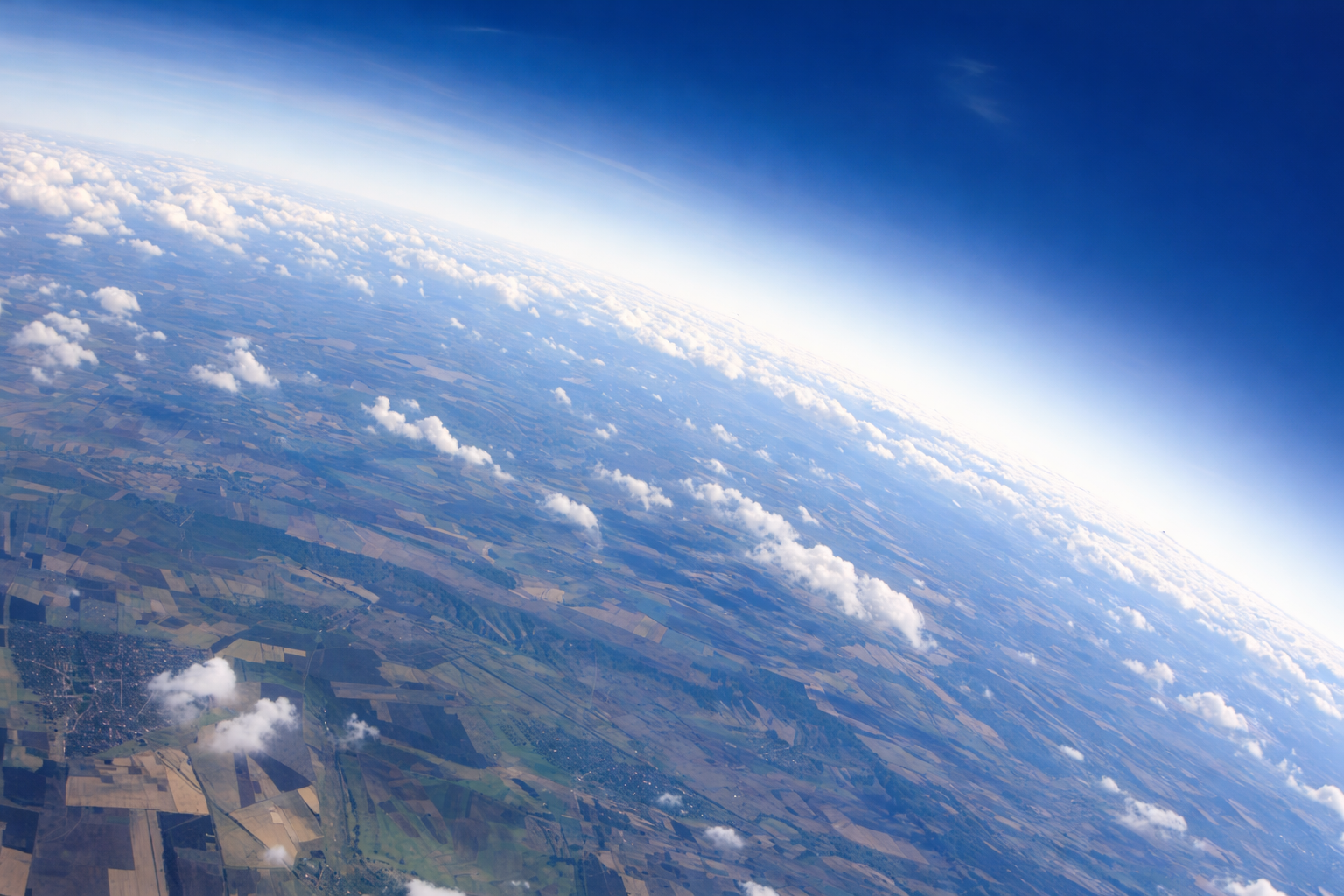
Our photon slams into Earth’s atmosphere at the speed of light. And immediately, things get complicated again.
The atmosphere is thin, but it’s not nothing. It’s an ocean of gas; nitrogen, oxygen, argon, carbon dioxide; and the photon has to run a gauntlet.
Some photons don’t make it. Ultraviolet light gets absorbed by ozone in the stratosphere, which is why we don’t all get instant sunburns and skin cancer every time we step outside. Some light gets scattered by air molecules. This is why the sky is blue. Blue light scatters more easily than red light, so it bounces around the atmosphere in all directions, painting the sky.
But our photon? It makes it through.
It threads the needle, dodging molecules. After traveling for so long, crossing such vast distances, it now races through the final 100 kilometers in mere milliseconds.
And then, in a particular place, at a particular moment, it finds you.
The Touch:

You’re standing outside. And our photon strikes your cheek.
The collision happens in an instant, faster than thought. The photon hits a molecule in your skin. Let’s say it’s melanin, the pigment that gives your skin its color. The melanin molecule absorbs the photon completely. After its ancient journey, it ceases to exist as a particle of light.
But its energy doesn’t disappear. Energy never disappears. It just changes form.
The melanin molecule, now supercharged with energy, starts vibrating. It jiggles and shakes, bumping into neighboring molecules, making them vibrate too. This vibration, this kinetic energy, is what we call heat. This is warmth.
This is what you feel.
The warmth on your face right now is nuclear fusion, transformed. It’s hydrogen atoms that fused in the Sun’s core long ago, converted into gamma rays, scattered through the Sun’s interior, emerging as visible light, crossing the void of space, penetrating Earth’s atmosphere, and finally, finally, landing on your skin as heat.
You’re feeling the Sun’s heart. You’re touching a star. Isn’t that amazing!
The Energy Flows On:
But the story doesn’t end there. The energy that our photon carried doesn’t just warm your skin and vanish. It flows, it transforms, it continues.
Some of that heat energy helps maintain your body temperature. Some might evaporate a tiny bit of moisture from your skin, sending a molecule of water into the air as vapor. That water molecule might eventually join a cloud, fall as rain, nourish a plant, get drunk by an animal, cycle through the biosphere for years before returning to the ocean.
And here’s the beautiful thing: other photons from the Sun are doing much more.
Right now, all around you, photons are striking leaves. Inside each leaf, in structures called chloroplasts, those photons power photosynthesis.
The oxygen you breathe? Made by sunlight striking leaves. The food you eat? Plants, or animals that ate plants, all ultimately powered by photons from the Sun. Even fossil fuels, those are just ancient sunlight, trapped in dead plants and animals from millions of years ago.
Every single thing you do requires energy. Walking, thinking, breathing, your heart beating right now as you read this, all of it powered by ATP molecules in your cells. And where did your body get the energy to make ATP? From the food you ate. And where did that food get its energy? From the Sun.
You are, quite literally, solar-powered.
The Cycle of Stars
Let’s zoom out for a moment. Let’s talk about what this all means.
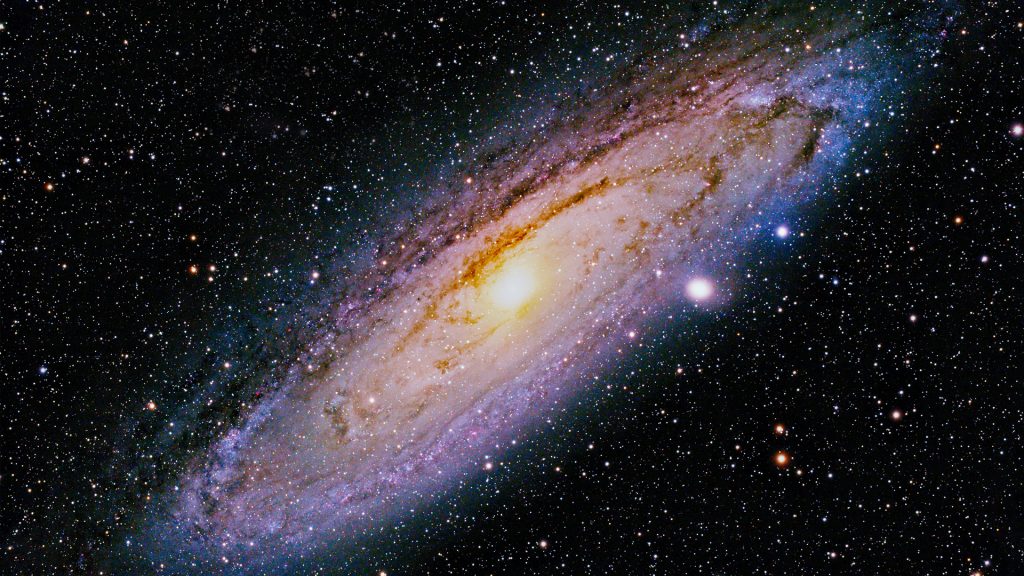
The Sun isn’t special. It’s one of about 200 billion stars in the Milky Way galaxy alone, and there are at least 100 billion galaxies in the observable universe. That’s something like 20 billion trillion stars, all doing the same thing our Sun does, fusing hydrogen into helium, converting mass into energy, pouring photons out into the cosmos.
And those photons? They’re the universe’s currency. They’re how energy moves, how information travels, how the cosmos does anything at all.
But here’s what gets me: of all the photons the Sun produces, only a tiny, infinitesimally tiny fraction ever hit Earth. Most fly off into space forever, traveling for billions of years, never touching anything, never warming any world, never powering any life.
The photon that hit your cheek? It completed an unlikely journey. Out of octillions of photons born in the Sun’s core, yours found Earth. Found you. In this particular moment, on this particular day, when you happened to be outside with your face turned toward the sky.
And yet, this happens constantly. Right now, billions of times per second, all over your skin, you’re being touched by photons that completed journeys begun long before you were born, all of them carrying the energy of stellar fusion, all of them connecting you to the deepest workings of the universe.
Tomorrow morning, the Sun will rise again. It always does.
New photons will make the eight-minute journey to Earth. Some will strike leaves, some will warm the oceans, some will paint the sky in shades of gold and pink and blue.
And some will find you.
You’ll feel it. That warmth, that light, that gentle presence of our star. And now you’ll know its story.
You’ll know that the light touching your face is ancient and young, violent and gentle, cosmic and intimate all at once. You’ll know that you’re connected to the Sun not just by distance but by physics, by chemistry, by the flow of energy that makes life possible.
And the Sun, 150 million kilometers away, burning as it has for billions of years, continues its work fusing hydrogen, creating light, sending photons out into the cosmos in all directions.
Some of them are headed for you.
The cycle continues. The light flows on.
That’s the story of sunlight.
That’s the story of you.
That’s the story of all of us.
And the little girl who tried to catch sunlight in her hands? She isn’t a girl anymore. And she isn’t furious at the Sun. These days, she sits with the morning sun, face tilted toward the sky, absorbing its warmth, smiling.
She caught it after all. Just not the way she expected.
Every breath she takes, every thought she thinks, every beat of her heart, powered by the Sun she once tried to hold. She finally understands. It lives in her. It always has.

No responses yet